
How to Register a Cyber Security Company in India? Step-by-Step Process, Cost & Documents Required
First Startup
Jun 09, 2026
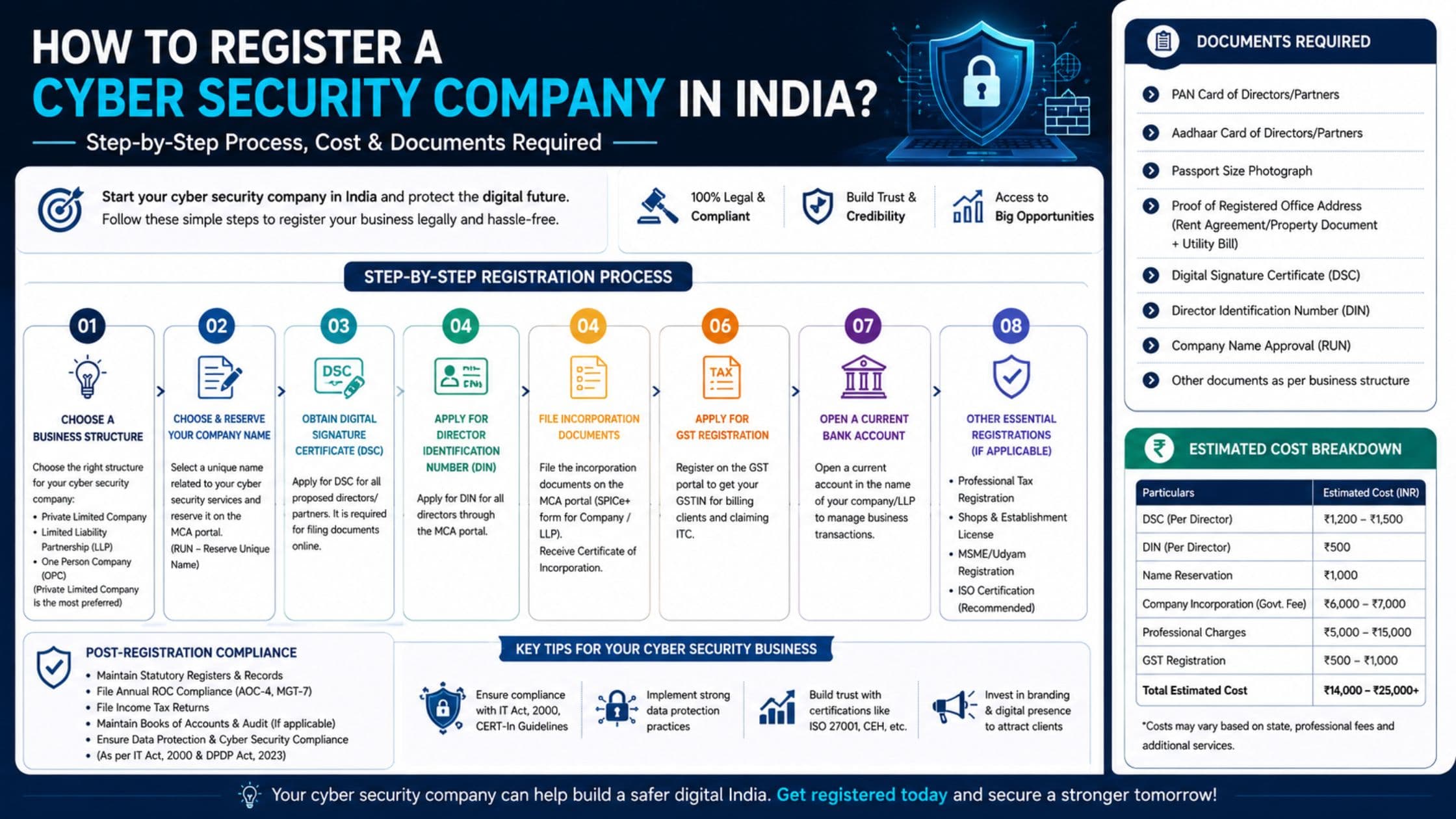
The cyber security industry in India is growing rapidly as businesses, startups, government organizations, and enterprises increasingly focus on protecting their digital assets from cyber threats. With the rise in cyberattacks, ransomware incidents, data breaches, and online fraud, the demand for professional cyber security services has never been higher.
If you are planning to start a cyber security company in India, registering your business legally is the first step toward building a professional and trustworthy brand. Proper registration helps establish credibility, attract corporate clients, comply with regulations, and expand your business successfully.
In this guide, we'll explain how to register a cyber security company in India, including the business structure, required documents, registration process, estimated costs, and compliance requirements.
What is a Cyber Security Company?
A cyber security company provides services that help businesses protect their networks, systems, applications, and data from cyber threats.
Common cyber security services include:
Network Security
Penetration Testing
Vulnerability Assessment
Security Audits
Ethical Hacking Services
Data Protection Solutions
Cloud Security
Incident Response Management
Cyber Risk Assessment
Security Consulting
Security Operations Center (SOC) Services
Compliance and Risk Management
With increasing digital transformation across industries, cyber security businesses have excellent growth potential in India.
Why Register a Cyber Security Company?
Many professionals start as freelance cyber security consultants, but registering a company provides significant advantages.
Benefits of Company Registration
Creates a legal business identity
Builds trust among clients
Enables corporate contracts
Helps obtain GST registration
Allows opening a business bank account
Improves brand reputation
Facilitates funding and investment opportunities
Supports business expansion
Large organizations generally prefer working with registered cyber security firms rather than individual freelancers.
Best Business Structure for a Cyber Security Company
Before starting the registration process, choose the appropriate business structure.
1. Sole Proprietorship
Suitable for individual cyber security consultants.
Advantages
Easy setup
Low cost
Minimal compliance
Limitations
Unlimited liability
Limited scalability
Less credibility for enterprise clients
2. One Person Company (OPC)
Best for solo entrepreneurs who want limited liability protection.
Advantages
Separate legal identity
Professional image
Limited liability
3. Limited Liability Partnership (LLP)
Ideal for cyber security professionals starting a business with partners.
Advantages
Flexible management
Limited liability
Lower compliance than companies
4. Private Limited Company
A Private Limited Company is generally the most recommended structure for cyber security businesses.
Advantages
High credibility
Better client confidence
Easy investment opportunities
Separate legal identity
Limited liability protection
Suitable for scaling operations
Most successful cyber security startups choose Private Limited Company registration.
Documents Required for Cyber Security Company Registration
For Directors or Shareholders
PAN Card
Aadhaar Card
Passport-size Photograph
Mobile Number
Email ID
Address Proof (Bank Statement, Electricity Bill, or Driving License)
Registered Office Address Documents
Electricity Bill
Water Bill or Property Tax Receipt
Rent Agreement (if rented property)
NOC from Property Owner
Step-by-Step Process to Register a Cyber Security Company
Step 1: Choose a Business Structure
Decide whether you want to register as:
Sole Proprietorship
OPC
LLP
Private Limited Company
For long-term growth and enterprise clients, a Private Limited Company is generally preferred.
Step 2: Obtain Digital Signature Certificate (DSC)
All proposed directors must obtain a Digital Signature Certificate to sign electronic documents during registration.
Step 3: Apply for Director Identification Number (DIN)
Directors of the company must obtain a DIN through the Ministry of Corporate Affairs (MCA).
Step 4: Select and Reserve Company Name
Choose a unique business name related to cyber security services.
Examples:
SecureNet Cyber Solutions Private Limited
Cyber Shield Technologies Private Limited
DataGuard Security Solutions LLP
SecureByte Cyber Security Private Limited
The name must comply with MCA naming guidelines.
Step 5: File Company Incorporation Application
Submit the registration application with all required documents through the MCA portal.
Step 6: Receive Certificate of Incorporation
After successful verification, MCA issues the Certificate of Incorporation.
This document legally establishes your cyber security company.
Step 7: Obtain PAN and TAN
After incorporation, PAN and TAN are issued for taxation purposes.
Step 8: Open a Business Bank Account
Open a current account in the company name for professional financial management.
Step 9: Apply for GST Registration
Cyber security companies often provide services across India and internationally, making GST registration beneficial.
GST Registration for Cyber Security Companies
GST registration helps:
Improve business credibility
Claim Input Tax Credit (ITC)
Work with large corporate clients
Ensure tax compliance
Conduct interstate business operations
Many cyber security companies voluntarily register for GST even before reaching the turnover threshold.
MSME Registration Benefits
Cyber security startups can apply for MSME Registration.
Benefits Include
Easier access to loans
Government subsidies
Lower interest rates
Tender participation benefits
Financial support programs
Startup India Registration
Technology-driven cyber security startups may also qualify for Startup India recognition.
Benefits of Startup India
Tax exemptions
Faster compliance
Funding opportunities
Government support
Networking benefits
Intellectual property assistance
Estimated Cost of Registering a Cyber Security Company
The registration cost depends on the chosen business structure and professional assistance.
Approximate Registration Costs
- Pvt Ltd Company Registration Fees: ₹8,750/–
- LLP Registration Fees: ₹7,500/-
- OPC Registration Fees: ₹7,500/-
- Proprietorship/Partnership Fees: ₹3,540/-
Costs may vary depending on state, government fees, and professional charges.
Additional Registrations for Cyber Security Companies
Depending on your operations, you may also consider:
GST Registration
MSME Registration
Startup India Registration
Trademark Registration
Import Export Code (IEC) for international services
Professional Tax Registration (where applicable)
Why Trademark Registration is Important
Your company name and logo represent your brand identity.
Trademark registration helps:
Protect your business name
Prevent unauthorized usage
Build brand value
Strengthen legal protection
Technology companies often prioritize trademark protection from the beginning.
How to Grow a Cyber Security Company After Registration
Build a Professional Website
Your website should include:
Service pages
Case studies
Certifications
Contact information
Security expertise
Obtain Industry Certifications
Popular certifications include:
CEH (Certified Ethical Hacker)
CISSP
CompTIA Security+
CISM
ISO 27001 Lead Auditor
Create Corporate Service Packages
Offer specialized services such as:
Penetration Testing
Security Audits
Compliance Consulting
Vulnerability Assessments
Managed Security Services
Focus on Enterprise Clients
Registered companies gain better opportunities to work with:
Banks
Fintech Companies
IT Companies
Government Organizations
Healthcare Institutions
E-commerce Businesses
How First Startup Can Help Register Your Cyber Security Company
First Startup provides complete company registration support for cyber security startups and technology businesses across India.
Our services include:
Startup India Registration
Our experts ensure a smooth, affordable, and hassle-free registration process.
Conclusion
Starting a cyber security company in India is an excellent business opportunity due to increasing demand for digital security services. Registering your business properly helps build trust, attract corporate clients, ensure legal compliance, and create a strong foundation for future growth.
For most entrepreneurs, a Private Limited Company is the preferred structure because it offers credibility, limited liability, and scalability. Along with GST, MSME, Startup India, and Trademark registrations, proper business registration can help position your cyber security company for long-term success.
Frequently Asked Questions (FAQs)
1. Can I start a cyber security company from home?
Yes, many cyber security businesses start from home and use a residential address as their registered office.
2. Which company structure is best for a cyber security business?
A Private Limited Company is generally the best option for growth and credibility.
3. Is GST registration mandatory?
GST registration depends on turnover and business activities, but many companies register voluntarily.
4. How long does cyber security company registration take?
Generally, registration takes 5 to 15 working days depending on approvals and documentation.
5. Can I provide cyber security services internationally?
Yes, registered Indian cyber security companies can legally serve global clients.
6. Do I need technical certifications to start a cyber security company?
Certifications are not mandatory for registration but help build client trust and credibility.
7. Can I register a cyber security startup under Startup India?
Yes, eligible cyber security startups can apply for Startup India recognition.
8. Is Trademark Registration necessary?
While not mandatory, trademark registration is highly recommended to protect your brand name and logo.